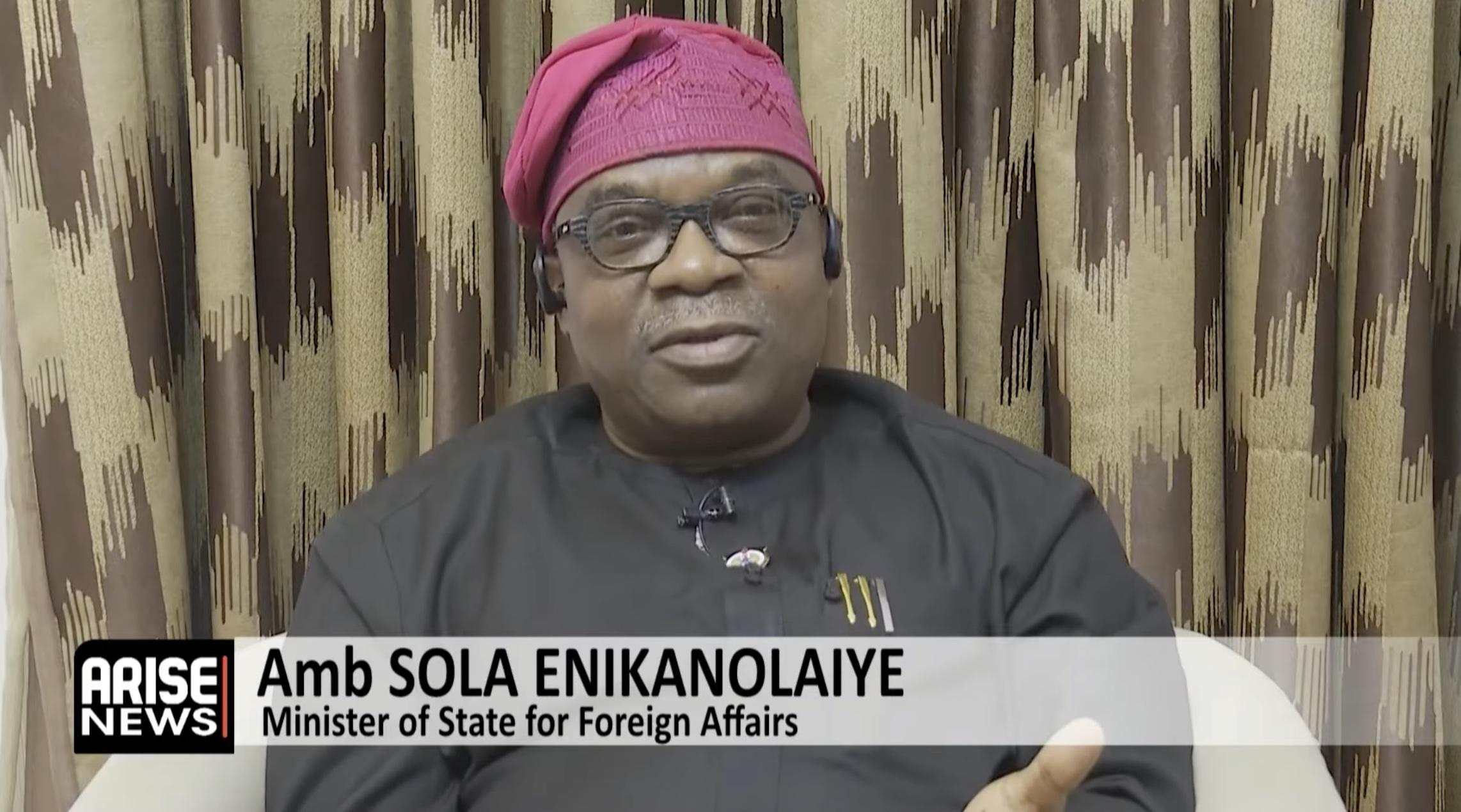
Enikanolaiye: Nigeria Rejects Claims It Has Largest Migrant Population in South Africa
Deputy foreign affairs minister Sola Enikanolaiye says Nigerians are not the largest migrant group in South Africa and urges stronger protection for all foreigners.
Deputy foreign affairs minister Sola Enikanolaiye says Nigerians are not the largest migrant group in South Africa and urges stronger protection for all foreigners.
Speaking during an interview with ARISE News on Thursday, Nigeria’s Minister of State for Foreign Affairs, Ambassador Sola Enikanolaiye, said Nigeria does not want tensions with South Africa to turn into a diplomatic breakdown, as he defended ongoing evacuation efforts and called for stronger protection of migrants.
He said the issue is being handled through diplomacy, not confrontation, and stressed that existing bilateral systems remain active. “We do not want to make this a full-blown diplomatic crisis between these two brotherly nations,” he said.
He explained that Nigeria is relying on established diplomatic channels to manage the situation and protect its citizens. “Our job is to activate those mechanisms and deepen partnership and cooperation with South Africa, with a view to securing better protection for our nationals,” he said.
He added that the process will continue over several weeks as more citizens opt to return. “This is the first batch. We are going to run this over the next three to four weeks,” he said.
On reports of attacks and rising tension, he said Nigeria is not satisfied with how the situation has been handled by South African authorities. “We are not satisfied with the way and manner the South Africans have handled this challenge,” he said.
He stressed that the responsibility to protect everyone within a country rests with the state, regardless of immigration status. “The primary responsibility for the protection of life and property of everyone in South Africa lies squarely with the government of South Africa,” he said.
He also rejected arguments linking undocumented status to loss of protection, insisting that migrants remain entitled to safety.
On claims that Nigerians make up the largest migrant group in South Africa, he pushed back, saying the narrative is incorrect and often exaggerated. “We are not the largest African migrant population in South Africa,” he said.
He added that other African nationalities form larger migrant communities in the country. “The largest numbers come from the sub-region. We are not the largest,” he said.
He said targeting migrants would not resolve South Africa’s economic challenges, warning against blaming foreigners for wider domestic issues. “Even if you expel all non-South Africans, I’m not convinced the problem of economic challenges, poverty, jobs will be solved,” he said.
He said Nigeria has policy options available but declined to reveal details, stressing that any response would remain measured within diplomatic practice. “There are options. The Nigerian government is not without options,” he said.
He added that Nigeria and South Africa must continue to work together as partners on the continent. “We are in Africa together. We must work together,” he said.
He said Nigerians contribute to key sectors of South Africa’s economy, including healthcare, education, and small businesses, and urged Nigerians abroad to respect local laws while assuring them of government support. “Those who do not have papers should make efforts to regularise them,” he said.
He added: “Nigerians in South Africa should rest assured that the Nigerian government is behind them.”