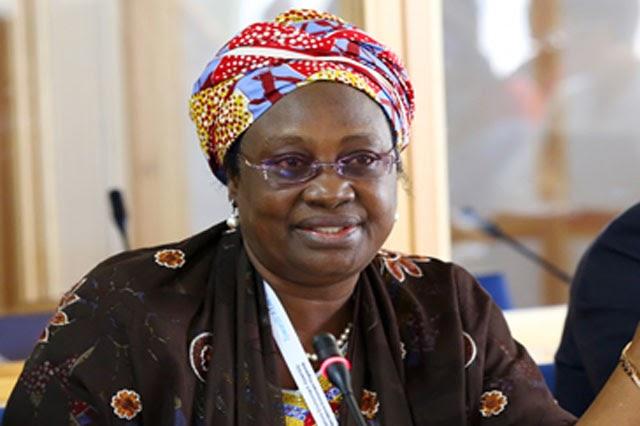
A former Minister of Environment, Lawrencia Mallam, on Saturday lamented the collapse of Nigeria’s once-booming textile industry, describing its decline as a “national shame” and a key driver of unemployment and insecurity.
- +Memoir launch spotlights Nigeria’s textile industry collapse
Mallam spoke in Lagos at the public presentation of a memoir titled “Do the Needful: Chronicling the Life and Times of Comrade Dele Ariyo,” written in honour of the late textile union pioneer, Lawrence Ariyo.
Mallam spoke in Lagos at the public presentation of a memoir titled “Do the Needful: Chronicling the Life and Times of Comrade Dele Ariyo,” written in honour of the late textile union pioneer, Lawrence Ariyo.
The event drew stakeholders from academia, labour, and the manufacturing sector.
The former minister said the shutdown of textile mills, particularly in Kaduna State, once a major industrial hub, reflected years of policy neglect and infrastructural decay.
She said, “The textile industry in Nigeria is dead.
In Kaduna alone, we had over five major textile companies that were very active. Today, they are no more. Cotton production, which used to sustain these industries, has also collapsed.”
Mallam identified poor infrastructure, especially erratic electricity supply, as the most critical factor undermining industrial growth, insisting that no meaningful revival could occur without stable power.
“You cannot revive the textile industry without electricity. Let the government fix power, and investors will come. Not just textile, many industries will spring up again,” she added.
She also decried Nigeria’s growing dependence on imported fabrics, noting that the country had lost its status as one of Africa’s leading textile producers.
“It is China that produces what we wear today. That should not be so. Nigeria used to be among the top textile producers in Africa, but today, the industry is nowhere to be found,” she said.
Mallam argued that reviving the sector would have a direct impact on unemployment and insecurity, stressing that job creation remained central to national stability.
“If industries are revived and jobs are created, the insecurity we are facing today will naturally reduce,” she said.
Also speaking, the Dean of the Faculty of Social Sciences, Lagos State University, Prof Olufemi Lawal, described the memoir as an important historical account of Nigeria’s textile industry and its gradual decline.
He said the book provides insight into the sector’s past contributions to the economy and the structural challenges that led to its collapse.
“There was a time when textile production and cotton export contributed significantly to Nigeria’s economy. The book highlights what went wrong and suggests practical steps for revival,” Lawal said.
The author of the memoir, Olusegun Ariyo, son of the late textile union leader, said the publication was both a tribute to his father and a call for policy action to restore the sector.
He urged the government to “do the needful” by implementing reforms to revive textile manufacturing and expand employment opportunities.
The event saw other speakers harp on the need for the government to urgently intervene to resuscitate Nigeria’s textile industry.