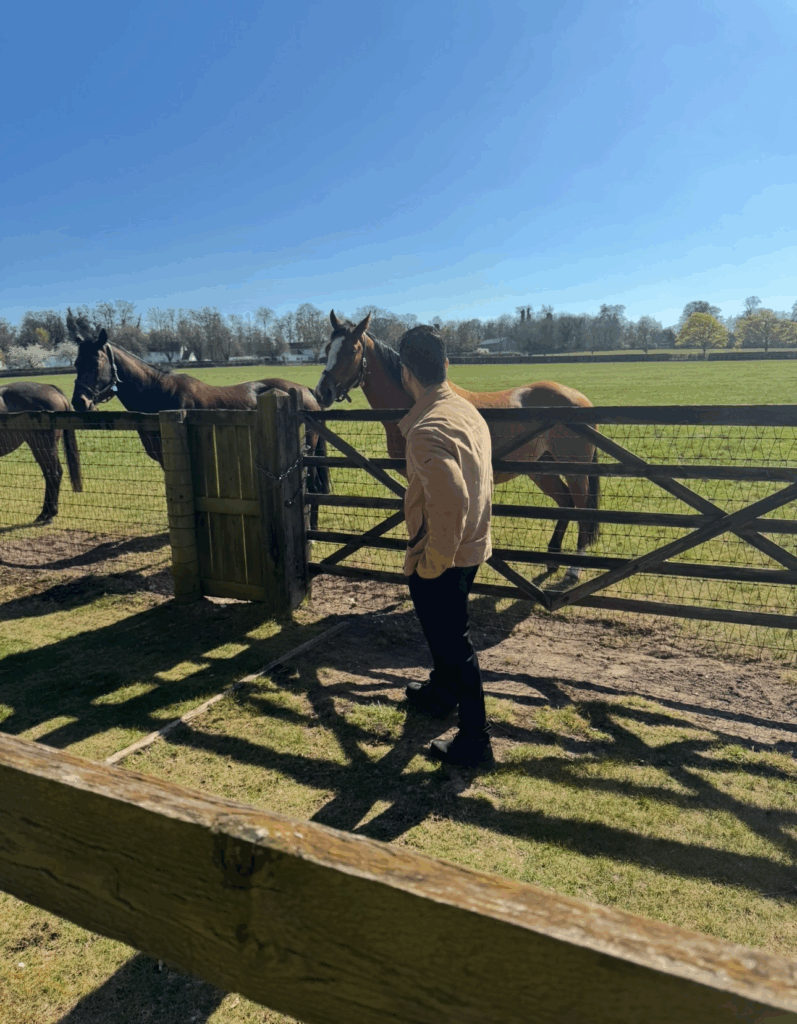
On any given Saturday in Ikoyi, on a grass field that most Lagosians have never seen and could not easily locate, a small group of men and women are on horseback, chasing a ball across a pitch with wooden mallets, watched by a tent of people drinking champagne at eleven in the morning. For most of the city, it might as well be on another continent.
- +Kings and commerce: Inside Lagos’s high stakes world of Polo and power
Polo sits so far outside Lagos’s ordinary leisure that most people would struggle to describe it as a Lagos thing at all.
Polo sits so far outside Lagos’s ordinary leisure that most people would struggle to describe it as a Lagos thing at all. The horses fly in from Argentina, the professional players often from the same place, the champagne from France. And yet the sport has been here since 1904, older than Nigerian nationhood, longer-rooted than most of what the city calls tradition. What has changed is who holds the reins, and what they intend to build.
In the north, the horse was never a sport. It was a statement. For centuries before colonialism, horses in northern Nigeria were instruments of war, royal ceremony, and political authority. That history made the north fertile ground when polo arrived. In the 1920s, the Emir of Katsina, Muhammadu Dikko, visited England, returned captivated, and built the game among the northern elite. His son and successor, Emir Nagogo, reached a handicap of +7, still the highest achieved by a Nigerian player, and his team dominated national competition for decades. Emirs played. The military played. Governors played. The sport followed those lines and largely stayed within them.
Lagos received it on different terms. The Lagos Polo Club was founded in 1904, when British naval officers introduced the sport and played it on an airstrip shared with what is now the Ikoyi Club. By 1914, the game had already acquired international stakes, with Kaiser Wilhelm II of Germany donating a silver trophy for a championship between Nigeria and German Cameroon, a cup renamed the Independence Cup after 1960 and still contested today. When the British departed after independence and the colonial clubs lost their original membership, it was young businessmen and affluent Nigerians who stepped in to sustain the sport. Commerce filled the space that authority had vacated, and that substitution has defined Lagos equestrian culture ever since.
Among the people shaping it today is Prateek Suri, chairman of Maser Group and among the wealthiest figures in the Lagos business community. He did not grow up riding. His serious engagement came through years operating in Britain, where he attended Royal Ascot and Windsor, and observed what the sport looks like when it has had centuries to bed in. What he noticed was that its power as a social institution had nothing to do with the horses themselves. It had to do with what gathering around horses allowed people to become one another. He brings that understanding to Lagos now. His horses are fed on raw oats imported from Australia, and when he talks about what the scene here could become, he does not sound like someone with a hobby. “Instead of replicating European traditions,” Suri says, “Lagos has the opportunity to define its own equestrian identity.” He is talking about training academies, breeding programmes, and infrastructure built to last.
Others are already operating at that level of commitment. Prince Albert Esiri’s Ashbert Raiders are the only African team that regularly competes at the prestigious British Open at Cowdray Park, and Usman Dantata’s team became the first African side to win the USA Gold Cup. At its most committed, Lagos polo can hold its own anywhere in the world, and the people inside it know exactly what that means for what comes next.
To understand where the culture is actually heading, you have to leave Ikoyi and drive east. In Epe, a 220-hectare estate called Isimi Lagos describes itself as Nigeria’s first wellness and polo country estate, offering forest villas, wellness trails, a farm shop, and a polo field. What the estate is selling, underneath the polo, is the idea of a different pace, weekends away from Lagos’s noise and eventually, for some buyers, something more permanent. The Isimi Lagos Polo Festival launched in 2024, and its 2025 edition was opened by Lagos State Governor Babajide Sanwo-Olu, with the King’s Cup match played in honour of the Ooni of Ife. One executive present captured its appeal plainly: “Everyone I’m trying to reach as a business partner is here today.” This year, the Lagos Polo Club announced a partnership to build a private polo ground within the Isimi estate, its first formal expansion beyond Ikoyi in 121 years, signalling that the sport is beginning to understand itself not as a fixture of one neighbourhood but as the foundation for a broader way of life.
None of this is accessible, and that, partly, is the point. Argentine horses are imported for upwards of $30,000 each, and a competitive player needs at least six to eight to field a serious team, before stabling, veterinary care, specialist feed, and a full seasonal circuit of tournaments. The Lagos International Polo Tournament earlier this year drew sponsors from the top of Nigerian and international corporate life: GTCO, Dangote, American Express, and Veuve Clicquot. You know roughly who will be under the tent before you arrive, and that predictability is engineered rather than incidental.
In England, equestrian culture exists inside an institutional structure so old it no longer needs to justify itself. Lagos has no such structure, and that absence is precisely what makes the current moment interesting. There is no existing order to defer to and no template inherited from a colonial administration or a royal court. What gets built here will be shaped entirely by the people building it, widely travelled, commercially sharp, and increasingly convinced that Lagos does not need to look anywhere else for permission to belong in this conversation. In that sense, they are doing what the Emirs of the north did a century ago when they took a British sport and made it the language of northern power. They are taking something from elsewhere and making it entirely their own.
The Lagos Polo Club’s riding academy now trains over 200 students annually, which is progress. But turning students into players, and players into a sport that sustains itself, takes generations. The dependence on imported horses and foreign expertise has not changed, and what exists today still rests on the commitment of a small number of wealthy individuals rather than institutions strong enough to outlast any one of them.