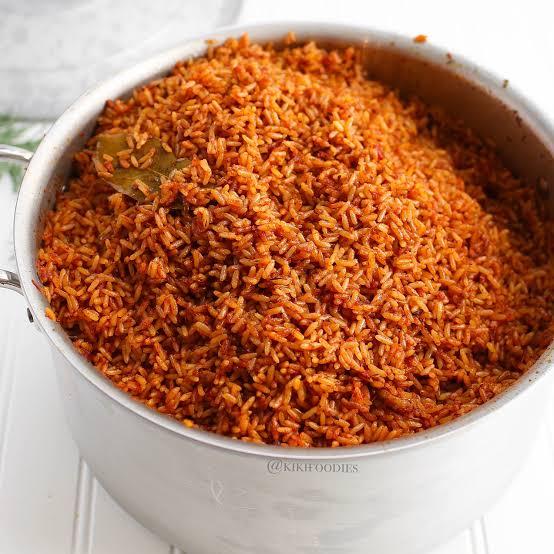
If you have ever eaten jollof rice at a Nigerian owambe and immediately wondered why yours at home never tastes the same, you are not alone. The difference is not luck. It comes down to a few specific choices made during cooking, most of which have nothing to do with a secret ingredient.
- +3 tips to make your jollof rice taste like party jollof
- +Roast your tomatoes and peppers before blending
- +Fry the tomato base until the oil floats
Here is what actually separates home jollof from the kind you enjoy at parties.
Here is what actually separates home jollof from the kind you enjoy at parties.
Roast your tomatoes and peppers before blending
Most home cooks blend their tomatoes and peppers raw and go straight to frying. Party jollof cooks often roast or char their peppers and tomatoes first, either in an oven or directly over a flame. Roasting reduces the water content and adds depth to the base before any cooking begins. The result is a tomato base that fries down faster and tastes more concentrated.
Fry the tomato base until the oil floats
This is the step most home cooks cut short. The blended tomato and pepper mix must fry on medium heat until the oil visibly separates and rises to the surface, the sauce thickens to a stew-like consistency, and the raw pepper smell disappears entirely. The sauce should look like fried stew and smell nothing like raw pepper before the rice goes in. Skipping this stage is the most common reason home jollof tastes flat or slightly sour.
Steam is what finishes party jollof, but water starts the process. You need both, and the balance between them is where most home cooks go wrong. Too much liquid and the rice turns wet and soft rather than cooking through with distinct grains. To keep the steam trapped, seal the pot tightly with aluminium foil before placing the lid on top. The foil creates a near-airtight seal that holds the steam in. Several Nigerian cooks flag this as one of the most important steps in the entire process.