FOR THE RECORDS: What Tinubu’s new SA on Homeland Security wrote in 2023 about Nigeria’s security
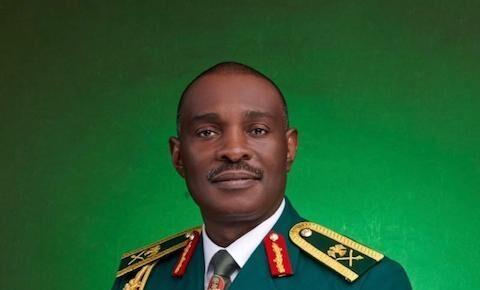
On Monday, President Bola Tinubu appointed Adeyinka Famadewa as his Special Adviser on Homeland Security.
On Monday, President Bola Tinubu appointed Adeyinka Famadewa as his Special Adviser on Homeland Security.
The appointment of Mr Famadewa, a retired major general, was announced by the Office of the Secretary to the Government of the Federation.
“Mr Fadewa is a highly decorated retired general with over three decades of distinguished military and intelligence service spanning national security strategy, intelligence fusion, counter-terrorism operations, and international security diplomacy. His career reflects a rare blend of operational excellence, strategic foresight, and institutional leadership in safeguarding Nigeria’s territorial integrity and national interests,” the SGF’s office wrote.
In 2023, Mr Famadewa wrote an article published on PREMIUM TIMES about what needs to be done to improve Nigeria’s national security.
While we are always talking about security, we should do so meaningfully, with the intention of developing a comprehensive and lasting response. One likely action is for the responsible authority to expressly state Nigeria’s definition of national security as a first step. This could be included in the next review of the NSS. Security is the responsibility of the whole of society, government and nation. Interrelatedness is a major characteristic of the modern society, and therefore, any talk of addressing insecurity by military force alone, is like using paracetamol to cure cancer.
Anyone born in the 1970s or earlier, will remember the famous song, released in 1990, by the American hip hop group, Salt-N-Pepa, and titled “Let’s talk about Sex.” The song, written by Herby Azor, promised listeners to talk about everything, including the good, the bad, the ugly, as well as the details of the players and “all things that may be”. I reckon that most people who needed to learn a thing or two about the subject would have taken time to train their ears to understand every letter of the lyrics. To support this belief, the writer stated in the lyrics that the song would be prohibited by the radio services. However, surprisingly or even disappointing enough, the song was all over the radios at that time because so much was said and yet, so little was said. The national security conversation in Nigeria for the last 15 years is akin to Salt-N-Pepa’s song on the aforementioned subject. While so much has been said about national security to the extent that it has influenced the decision of who sits at the apex of government in the revered Aso Rock Villa, the results we have consistently seen suggest that “yet, so little is said.” What then is the reason for this seemingly unfair conclusion?
First, what is national security, because the discussion of any subject commences with a proper understanding of the concepts in use? There are as many definitions of the concept of national security, as the number of those who have attempted to define it. The definition adopted is, most often than not, a function of the understanding and experience of those defining it. While the definition of the concept has been developing and expanding over time, thereby increasingly blurring its meaning, what it is not has always been very clear. According to Robert McNamara, a former United States’ Secretary of Defence, “Security is not military hardware, though it may include it. It is not military force, though it may encompass it. Security is development and without development there is no security.” The narrow notion of the concept of national security is about the survival of a state from external aggression and, as witnessed in recent global events, survival from internal domestic subversive organisations or insurgents. This explains the focus of ‘unconscious proponents’ of this notion, on sheer military force and the consequent increased defence budgets, which are often erroneously tagged “security expenditure”. A point to note and keep in a safe corner of our cerebrum is that, security is not a synonym for defence. Defence maybe an aspect of security but it is not security.
Flowing from the foregoing, therefore, what is the Nigerian definition of national security? A seat at any forum where national security is discussed, especially in the academia, will, more often than not, reveal one conclusion, which is, the security problem in Nigeria is due to to the absence of a Nigerian definition of national security or even that we do not have a national security policy. While I will refrain from joining the exercise of controversy over the absence of a policy, though we have a strategy, I will focus on the conclusion that Nigeria does not have its own definition of national security. To achieve this, I will invite you on a very quick consideration of Nigeria’s National Security Strategy 2019 (NSS 2019). Lets first take a look at the ‘Foreword’ of the document, as signed by President Muhammadu Buhari.
There, the President states that, “our vision of sustainable national security goes beyond reaction to physical threats. We must ensure clarity in our understanding of the dynamics of Nigeria’s security environment and address them in a comprehensive manner. We must optimise the effectiveness of the security sector by evolving systems and structures that encompass societal and governmental contributions. We must admit the evolution of new methodologies and technologies in contemporary national security systems. We will build national consensus to guide the implementation of the values and principles of our national security. Lastly, we live in a globalized world, so we must project our national security interests in a manner that promotes regional and international confidence and cooperation. These are the rationales for the review of the National Security Strategy 2014.”
Former President Buhari further stresses in the document that, “The implementation will be driven systematically, transparently and accountably to ensure that all Ministries, Departments and Agencies key into it and deliver expected measurable outcomes designed to enhance our resilience, stability and national strategy. This process will involve relevant Ministries, Departments and Agencies, Civil Society Organisations, Development Partners, the Armed Forces, Police, Security and Para-military organisations as well as the general public.”
In addition, Chapter Three of the document outlines the security threats facing Nigeria to include terrorism and violent extremism, armed banditry and kidnapping, porous borders, cybercrimes and technology challenges, socio-political threats, fake news and hate speech, public health challenges and economic challenges, among others.