Lagos State is moving to capture a larger share of the its N16.14 trillion annual food economy with the Lagos Central Food Systems & Logistics Hub in Ketu-Ereyun, Epe.
- +Lagos targets bigger slice of N16.14trn food market with new infrastructure
- +…expands agric training reach with 25,300 new beneficiaries across value chains
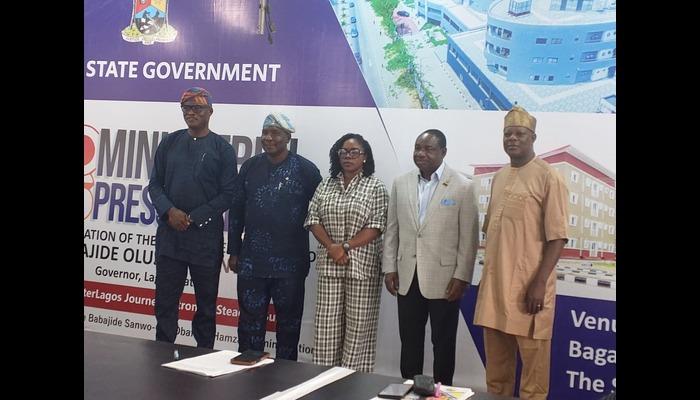
Speaking at the 2026 ministerial press briefing on Friday, Abisola Olusanya, commissioner for Agriculture and Food Systems, said infrastructure remains the backbone of the state’s food systems transformation agenda.
…expands agric training reach with 25,300 new beneficiaries across value chains
Speaking at the 2026 ministerial press briefing on Friday, Abisola Olusanya, commissioner for Agriculture and Food Systems, said infrastructure remains the backbone of the state’s food systems transformation agenda.
She pointed out that food security cannot be achieved by production alone, “as we believe that if food is not aggregated, transported, stored, processed, distributed, and marketed efficiently, then production gains will be lost through waste arising from inadequate storage, logistics, and market inefficiencies.”
“This is why Lagos has continued to prioritize infrastructure that not only supports production but also connects farms to markets and markets to consumers.
Abisola described the Lagos Central Food Systems & Logistics Hub as the flagship infrastructure push of Governor Babajide Sanwo-Olu’s administration, designed as a modern, data-driven platform to reshape how food enters, moves through, and is distributed across the state.
When fully operational, Abisola noted that the hub is expected to become the largest food logistics facility in Sub-Saharan Africa.
“It will service over 1,500 trucks daily and handle more than 1.5 million metric tonnes of food annually, with integrated cold and dry storage, processing and repackaging centers, quality control labs, and digital trading platforms aimed at cutting post-harvest losses and improving price stability,” she said.
According to her, the initiative sits at the center of Lagos’ broader strategy to build a comprehensive food system that goes beyond production.
She noted that the project is significant because the state remains Nigeria’s largest market, with an annual food economy estimated at N16.14 trillion.
Despite the huge market potential, Abisola stresses that other states benefit more from the opportunity as a large percentage of food consume in Lagos comes from outside.
According to her, this exposes the state to supply chain disruptions, high logistics costs, poor storage, price volatility, and post-harvest losses.
She noted that the Central Food Systems and Logistics Hub is the State’s strategic response to these challenges.
“By improving aggregation, storage, processing, and distribution, the hub will reduce waste, improve food safety, lower logistics costs, and support more stable food prices.”
“It will also create significant employment and enterprise opportunities across transportation, cold chain, warehousing, packaging, trading, processing, food safety, retail, and technology services.”
She added that the first phase of the project will be commissioned later this year.
Abisola described the move as a major turning point in Lagos State’s food systems transformation journey.
“It will demonstrate that Lagos is not only responding to food security challenges through temporary interventions, but through long-term infrastructure that will strengthen the food economy for generations.”
Also, Lagos has trained over 100,500 farmers and fishermen in modern agricultural practices under Lagos State’s food systems program.
In the year under review, an additional 25,300 farmers, fisherfolk, processors, livestock operators, coconut value chain actors, rice farmers, market operators, youths, women, and agribusiness owners have completed training.
The comissioner says the sustained rollout of these programs reflects its view that human capital is the foundation of food systems transformation, with a focus on technical support, enterprise advisory services, input sourcing, and market and financing linkages.
According to her, Lagos Agripreneurship Program is anchoring the youth-focused push, training over 1,500 young people in modern agriculture, poultry, piggery, aquaculture, crop production, agribusiness management, and value addition.
“The one-month intensive classroom and practical phase at the Ministry’s facility is followed by a three-month internship and mentorship.”
“Graduates receive agricultural productive assets such as net houses and accessories to run commercial leafy and fruity vegetable production in teams at the state’s food production centers in Badagry and Ikorodu.”
She said the program is designed to shift young school leavers from job seekers to job creators while improving food supply.
She says the initiative is changing perceptions of agriculture among students by framing it as a field of science, technology, enterprise, and leadership, with the aim of producing future agriculturists, agritech innovators, and food entrepreneurs.
Similarly, she noted that the Lagos State Butchers Academy is targeting the red meat value chain, training butchers in hygiene, safety, and modern processing to sanitize the industry and attract younger entrants.
“Operated at the mechanized abattoir in Oko-Oba, Agege, the academy teaches standard operational procedures, meat dissection techniques, and proper handling to reduce waste and build consumer trust.”
“Twenty youths have been trained and supported with containerized meat shops, with Governor Sanwo-Olu approving training for 40 more youths and 10 additional shops.”
She stressed that infrastructure remains the backbone of this agenda, noting that production gains are lost without efficient aggregation, storage, processing, and distribution.