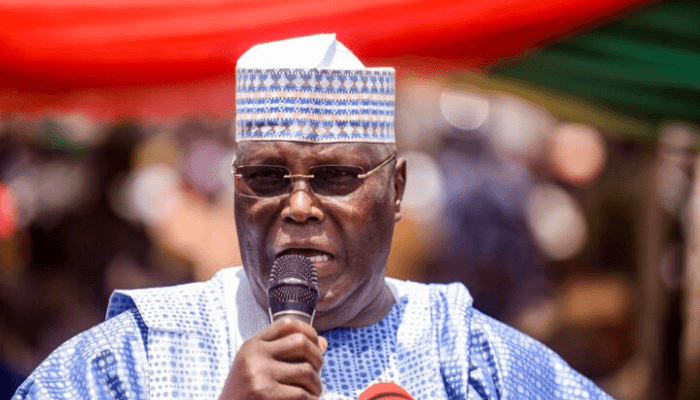
How Atiku’s emergence as ADC candidate will alter 2027 presidential polls calculations
The emergence of former Vice President Atiku Abubakar as the presidential candidate of the African Democratic Congress (ADC) will dramatically alter the political calculations ahead of the 2027 general election, setting the stage for what could become one of Nigeria’s most fiercely contested presidential races.
The emergence of former Vice President Atiku Abubakar as the presidential candidate of the African Democratic Congress (ADC) will dramatically alter the political calculations ahead of the 2027 general election, setting the stage for what could become one of Nigeria’s most fiercely contested presidential races.
Of the 24 states officially declared so far, Atiku has won 22, while Rotimi Amaechi, former Rivers State governor and Mohammed Hayatu-Deen, an economist, have secured one state each, in the ongoing collation of the ADC presidential primary election results.
The primary was held on Monday while the collation is taking place in Abuja. The final results are expected to be announced late Wednesday night.
Beyond the outcome of the primary, political analysts believe Atiku’s candidacy will nject fresh uncertainty into the 2027 race and unsettle existing assumptions surrounding power rotation between the North and the South.
For months, many political stakeholders had argued that the South should retain power until 2031 in line with Nigeria’s informal zoning and power rotation arrangement.
Supporters of the principle insist that since former President Muhammadu Buhari from the North completed two terms and left office in 2023, the South should equally complete eight uninterrupted years.
Atiku’s entry into the race from the North, however, has disrupted that expectation, making the situation dicey.
The former vice president, who previously stated that the 2027 contest would likely be his final attempt at the presidency after several unsuccessful bids, is once again positioning himself as the major opposition challenger to Tinubu.
In the 2023 presidential election, Atiku challenged Tinubu’s victory up to the Supreme Court, but the apex court affirmed Tinubu as the duly elected president.
Now, with the ADC platform behind him, observers say Atiku’s candidacy could significantly reshape alliances, voting patterns and regional calculations ahead of 2027.
Many political observers believe his emergence may energise sections of the North dissatisfied with the current administration. Across several northern states, concerns over worsening poverty, unemployment, insecurity, banditry, kidnapping and recurring Boko Haram attacks have continued to fuel criticism of the government.
Analysts argue that these grievances could strengthen Atiku’s appeal in the region, particularly given the North’s numerical advantage with 19 states and the Federal Capital Territory.
Supporters of the ADC candidate believe his experience, political network and strong northern base could provide the opposition with a formidable platform to challenge the APC. Some even argue that his candidacy may reopen the path for the North to reclaim power earlier than expected.
Dele Momodu, a chieftain of the ADC in a Channels TV interview said, “If the North fields one candidate, nobody can defeat them. I’m sure about that. I haven’t seen that proliferation in the North.
“Everybody who is shouting today that they want to be president they are from the South. If Peter Obi, Jonathan, and Seyi Makinde decide to continue in the race, trust me, it is going to backfire for the South.”
Similarly, before the presidential primary, Dimeji Fabiyi, the ADC Deputy National Publicity Secretary, in an interview on Trust TV’s Daily Politics said, “Only a Northerner can defeat Tinubu in 2027, not a Southerner.”
He said no politician from the South, including prominent figures like Peter Obi and Seyi Makinde, has what it takes to defeat Tinubu in the 2027 election. Fabiyi specifically identified Atiku as the only Northern candidate with the political structure and capacity to challenge Tinubu in 2027.
However, critics insist Atiku’s decision to contest may weaken his support in parts of the South where many voters strongly favour the continuation of power in the region until 2031.
Nyesom Wike, Minister of the Federal Capital Territory (FCT), had said Atiku will not become Nigeria’s president, describing him as a “serial election loser.”
Speaking during an inspection of ongoing projects in Abuja, Wike said Atiku remained politically relevant only through constant presidential contests. “I encourage him to run again, but 2027 is not available for him,” Wike said. He insisting that opposition lacked the strength to unseat Tinubu in the next election.
Yet, some pundits argue that the South itself may head into the election divided.
Olusegun Osoba, former Ogun State governor and elder statesman has alleged that there is a coordinated political move against Tinubu across Southern Nigeria ahead of the 2027 election.
Speaking at the Presidential Lodge in Abeokuta during the announcement of the APC presidential primary results in Ogun State, Osoba claimed that several southern political figures were positioning themselves to fragment votes in the region and weaken Tinubu’s electoral dominance.
He warned members of the ruling APC against complacency, insisting that the party must prepare seriously for what he described as the real election.
“Many people are saying we have no opponents, but that is a misleading narrative. The enemies are many. As we approach the next election, there is a strong gang-up against us,” Osoba said.
“They are plotting to field several candidates from our region in the South. Obi has emerged, Jonathan is quietly waiting in the background, and Makinde has been grandstanding,” he added.
Osoba specifically identified former President Goodluck Jonathan, former Labour Party presidential candidate, Peter Obi and Oyo State governor, Seyi Makinde as influential figures whose ambitions or possible involvement could split southern votes ahead of the election.
With Atiku now on the verge of being firmly in the race, the battle for 2027 appears to have entered a new and unpredictable phase, one likely to test regional loyalties, party structures and the fragile political balance that has shaped Nigeria’s power-sharing arrangement for decades.