Why Nigeria’s airtime lending crisis matters — and what the fight is really about
For millions of Nigerians, borrowing airtime or data has become an everyday financial safety net.
For millions of Nigerians, borrowing airtime or data has become an everyday financial safety net.
Whether it is a trader trying to reach customers before making a sale, a student needing data to submit an assignment, or a worker waiting for salary payment, airtime lending services have evolved into a form of micro-credit embedded within the telecommunications system.
That is why the disruption of airtime lending services in April sparked widespread concern and exposed a growing regulatory battle between the telecom industry and the Federal Competition and Consumer Protection Commission (FCCPC).
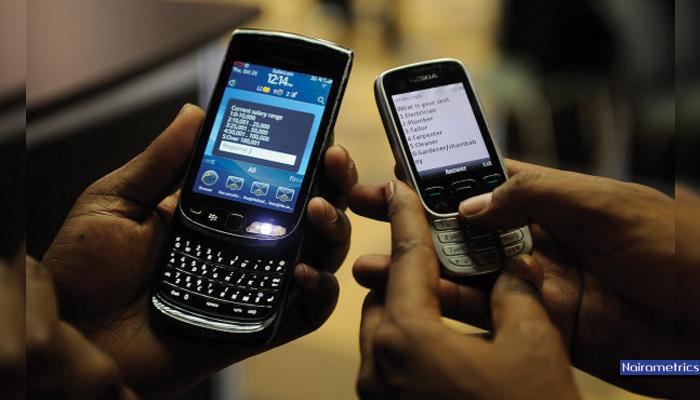
Airtime lending allows mobile subscribers to borrow airtime or data and repay automatically when they next recharge their lines.
For many Nigerians, particularly those in the informal economy, airtime lending functions as an emergency liquidity tool. A market trader can borrow airtime to contact customers before making a sale. A student can borrow data to submit coursework. A ride-hailing driver can remain online until the next payment arrives.
Industry estimates suggest the market is worth between N300 billion and N400 billion annually and serves about 40 million Nigerians, making it one of the largest telecom-enabled credit ecosystems in the country.
Unlike traditional loans, airtime lending typically requires no paperwork, branch visit or lengthy approval process. Eligibility is usually determined automatically based on a subscriber’s usage history and recharge patterns, allowing access to credit within seconds.
It is this simplicity that has made the service so popular—and also why any disruption attracts immediate public attention.
The dispute stems from the FCCPC’s Digital, Electronic, Online or Non-Traditional Consumer Lending Regulations 2025 (DEON Regulations), which classified airtime and data credit services as forms of consumer lending and subjected them to a licensing and compliance regime designed for digital lenders.
The commission argued that the regulations were intended to strengthen consumer protection and improve oversight of digital credit products.
Industry players, however, viewed the move differently.
Their argument was that airtime lending is fundamentally a telecommunications value-added service regulated by the Nigerian Communications Commission (NCC), not a conventional loan product requiring separate consumer lending licences.
Faced with the new regulatory framework and potential compliance implications, telecom operators suspended airtime and data credit services in April.
The disruption affected services relied upon by an estimated 40 million Nigerians. Industry estimates place the annual market at between N300 billion and N400 billion.
FCCPC maintained that it never ordered operators to shut down the services, insisting the suspensions were commercial decisions taken by the companies themselves.
WASPAN went to court. ALTON chose advocacy.
One of the most interesting aspects of the crisis was the differing approaches adopted by industry stakeholders.
The Wireless Application Service Providers Association of Nigeria (WASPAN), whose members provide much of the technology infrastructure behind airtime lending, challenged the DEON Regulations in court, arguing that the FCCPC had exceeded its legal authority and imposed obligations beyond its powers.
The Association of Licensed Telecommunications Operators of Nigeria (ALTON), on the other hand, largely pursued engagement and advocacy, repeatedly warning about regulatory overlap and urging coordination between the FCCPC and NCC.
ALTON Chairman, Gbenga Adebayo, argued that the regulations risked disrupting services and creating uncertainty within the telecommunications ecosystem.
In many ways, the industry’s response became a two-track strategy: WASPAN fought in court while ALTON fought in the policy arena.
In April, the Federal High Court in Lagos restrained the FCCPC from enforcing key aspects of the DEON Regulations pending the determination of the substantive suit.
A separate court order in Abuja also restrained actions that would interfere with licensed value-added service providers operating on telecom networks.
The FCCPC later suspended implementation of the regulations, saying it was acting in obedience to the court order while continuing to contest the matter legally.
That development paved the way for operators to begin reconsidering the suspension of airtime lending services.
Following the FCCPC’s suspension of DEON enforcement, Airtel and Globacom restored their airtime lending services, providing immediate relief to subscribers.
Adebayo subsequently expressed confidence that the regulatory environment had become clearer, noting that the courts had spoken and that operators now had a basis to restore services.
MTN, however, adopted a more cautious position.
Speaking during an investor engagement, Tobechukwu Okigbo said the company still required additional legal certainty before restoring XtraTime.
According to him, MTN would be more comfortable if the courts formally set aside the disputed regulations or if there was a definitive regulatory position eliminating any possibility of future compliance conflicts.
In short, Airtel and Glo interpreted the suspension of DEON enforcement as sufficient comfort to restart operations, while MTN has continued to cite lingering regulatory uncertainty.
This is one of the most important questions emerging from the dispute.
The FCCPC has consistently framed DEON as a consumer-protection framework. However, industry players argue that once airtime lending is treated as a formal consumer loan product, additional compliance obligations inevitably follow.
More extensive audit and monitoring obligations.
Industry stakeholders argue that such requirements increase operating costs for service providers. In competitive markets, those costs are sometimes absorbed by operators, but they can also be transferred to consumers through higher service charges, lower borrowing limits, tighter eligibility criteria, or fewer providers participating in the market.
There is currently no evidence that the FCCPC intended to impose new charges on consumers.
However, critics argue that applying a full digital-lending framework to a telecom product could create friction in a service whose appeal rests largely on speed, convenience and minimal bureaucracy.
A process that currently takes only a few seconds could, in theory, become subject to additional vetting, approvals and compliance procedures associated with other forms of digital credit.
Whether that outcome would ultimately occur remains a matter of debate, but it has become one of the central concerns raised by opponents of the DEON framework.
The legal dispute is no longer just about airtime borrowing.