When the rhythm of the drumbeats changes, the dance steps must adapt, says the proverb.
- +The Tinubu reforms: Shock therapy or structural break?
But what happens when the rhythm changes with a week’s notice, prices triple before the month is out, and the dancers are seventy million people who already spent most of their income on food?
But what happens when the rhythm changes with a week’s notice, prices triple before the month is out, and the dancers are seventy million people who already spent most of their income on food?
That is the question at the heart of the Tinubu reforms, and three years of accumulating evidence now make it possible to attempt a serious, provisional answer.
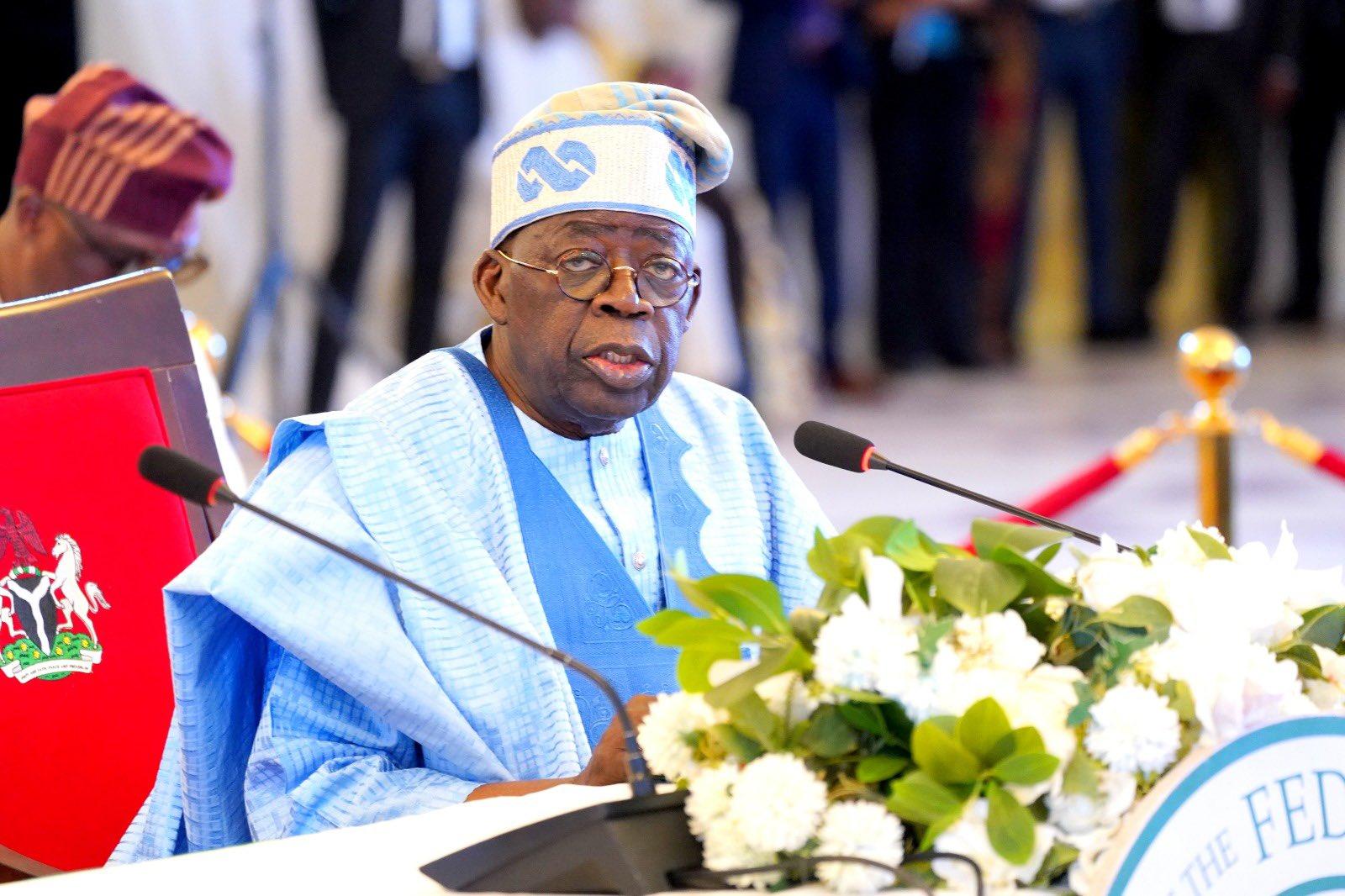
Bola Ahmed Tinubu inherited an economy in genuine distress. The federal government he took over in May 2023 was spending between seventy and eighty kobo of every Naira it collected on debt service, leaving functionally nothing for capital investment or social protection.
The petrol subsidy cost approximately ten billion dollars a year, more than the entire education budget, and had long since inverted its purpose: the richest 20% of Nigerians consumed the overwhelming majority of subsidised fuel while smugglers shipped the remainder across borders into Benin, Togo, and Ghana.
The official foreign exchange rate, held at approximately 460 Naira per dollar while the parallel market cleared at 760 Naira or above, had driven manufacturers, airlines, and multinationals into a two-tier fiction that made Nigeria structurally unprofitable for serious investment. Behind these distortions sat 22.7 trillion Naira in Ways and Means advances through which the Central Bank had been financing the government’s deficit directly, injecting money into an already-inflating economy while using administrative tools to suppress the consequences.
‘Subsidy is gone,’ Tinubu declared in the third paragraph of his inauguration speech, before he had finished his first glass of water as president. What followed was one of the most compressed reform sequences any major African economy has attempted outside a formal IMF programme: the subsidy abolished, the exchange rate unified, the central bank governor replaced, the monetary policy rate raised from 18.75% to a peak of 27.50% between 2023 and 2024, and electricity tariffs lifted toward cost-reflective levels.
Most reform programmes of this depth are phased over three to five years under IMF conditionality. Tinubu completed the equivalent in approximately nine months, without external cover and without a prepared public. Within eighteen months, Nigeria had implemented reforms that its previous four administrations had collectively spent twenty years promising and postponing.
The costs were severe and are not in dispute. Headline inflation rose from 22.4 percent at inauguration to 34.8 percent by December 2024. Food inflation peaked at approximately 40%, devastating the around 70% of Nigerian households that spend most of their income on eating.
The July 2024 minimum wage increase from N30,000 to N70,000, presented as relief, was exposed by the arithmetic of depreciation: at the then prevailing exchange rate, N70,000 was worth approximately $43 per month, while the N30,000 it replaced had been worth $65 at the pre-reform rate. Workers received a nominal rise of 133% that translated into a real pay cut of 34%.
The World Bank’s April 2026 Poverty and Equity Brief put the share of Nigerians living below the national poverty line at 63 percent in 2025, up from 56 percent in 2023, with approximately 140 million people affected. That figure, larger than the combined populations of Germany and the Netherlands, is the human weight on one side of the analytical scales. The August 2024 #EndBadGovernance protests, the most significant civil unrest since #EndSARS in 2020, gave that weight a voice. By March 2026, eleven consecutive months of declining prices had brought headline inflation to 15.38% (even though largely because of rebasing on 2024 prices), the lowest level since November 2020 according to NBS, the first tangible price relief statistic that most households had felt since the reform sequence began.
The macroeconomic stabilisation argument is, on its own terms, considerably more compelling than the government’s opponents have conceded. Gross foreign exchange reserves climbed from approximately 34 billion dollars at inauguration to 45.71 billion dollars by December 2025, rising further to 49.3 billion dollars by March 2026, with the CBN targeting 51 billion dollars by year-end. Nigeria ran a current account surplus of 6.1% of GDP in 2024. GDP growth accelerated from 2.9% in 2023 to 4.1% in 2024 (IMF World Economic Outlook, April 2026), with the Fund projecting 4.4% for 2026.
In December 2024, Nigeria returned to the international capital markets with a Eurobond issuance, attracting sufficient demand at a manageable spread after credit rating upgrades from both Fitch and Moody’s. The IMF, in its 2025 country assessment, confirmed that Nigeria had undertaken significant policy changes and regained access to international capital markets. These are not small achievements in a political economy that has historically reversed every uncomfortable reform before it could take root.
History offers sober but not discouraging counsel. Indonesia’s 1997 crisis saw the rupiah lose 85% of its value and GDP contract by 13.1% before the structural reforms implemented under IMF conditionality established the foundations on which Indonesia built twenty-five years of consistent 5% annual growth. Argentina recovered at 8% per year between 2003 and 2007 following the traumatic 2001 devaluation and default.
Ghana, the closest contemporary parallel, entered an IMF programme in 2023 after its cedi lost 55% of its value and inflation peaked at 54%. But by 2025, Ghanaian inflation was declining toward 20% and growth recovering to approximately 4.5%. The masquerade that dances too long will eventually be unmasked, and it is never the choreographer who is left standing in an empty room. The question is whether the structural foundations are genuinely different on the other side.
The reform that has not yet been sufficiently made sits in the debt service figures and cannot be ignored. Nigeria’s 2026 federal appropriation of N58.18 trillion allocates approximately N15.5 trillion to debt service, a level that has more than doubled in two years and reflects higher interest rates on domestic borrowing and the Naira depreciation’s effect on foreign-currency obligations.