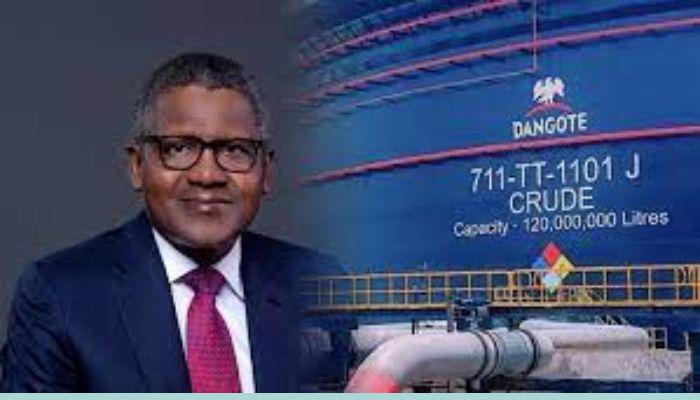
The Dangote Petroleum Refinery has filed a fresh lawsuit against the Attorney General of the Federation in a renewed push to challenge fuel import licences issued to marketers and the Nigerian National Petroleum Company Limited, escalating tensions in Nigeria’s downstream petroleum sector.
- +Dangote refinery sues FG over fresh fuel import licences
The refinery is asking the Federal High Court in Lagos to nullify import permits issued or renewed by the Nigerian Midstream and Downstream Petroleum Regulatory Authority (NMDPRA), according to court documents quoted by Reuters, arguing that the approvals violate an earlier court order directing parties to maintain the status quo.
The refinery is asking the Federal High Court in Lagos to nullify import permits issued or renewed by the Nigerian Midstream and Downstream Petroleum Regulatory Authority (NMDPRA), according to court documents quoted by Reuters, arguing that the approvals violate an earlier court order directing parties to maintain the status quo.
The suit marks a renewed legal confrontation almost one year after Dangote withdrew a similar case that sought to invalidate fuel import licences granted to NNPC and several fuel traders.
In the new filing, the refinery argued that the latest import approvals undermine its operations and contravene provisions of the Petroleum Industry Act (PIA), which it said permits imports only when local supply is insufficient to meet domestic demand.
The NMDPRA had not responded to requests for comments as of the time of filing this report.
Regulators and fuel marketers have consistently defended continued petrol imports, maintaining that imports remain necessary to guarantee market stability, prevent shortages and supplement domestic supply while local refining capacity continues to ramp up.
Nigeria has historically depended heavily on imported petrol due to years of underperformance by state-owned refineries.
The $20 billion Dangote refinery, with a nameplate capacity of 650,000 barrels per day, was widely expected to reduce or eliminate the country’s reliance on imported petroleum products.
However, fuel imports have persisted as the refinery gradually scales production and distribution capacity.