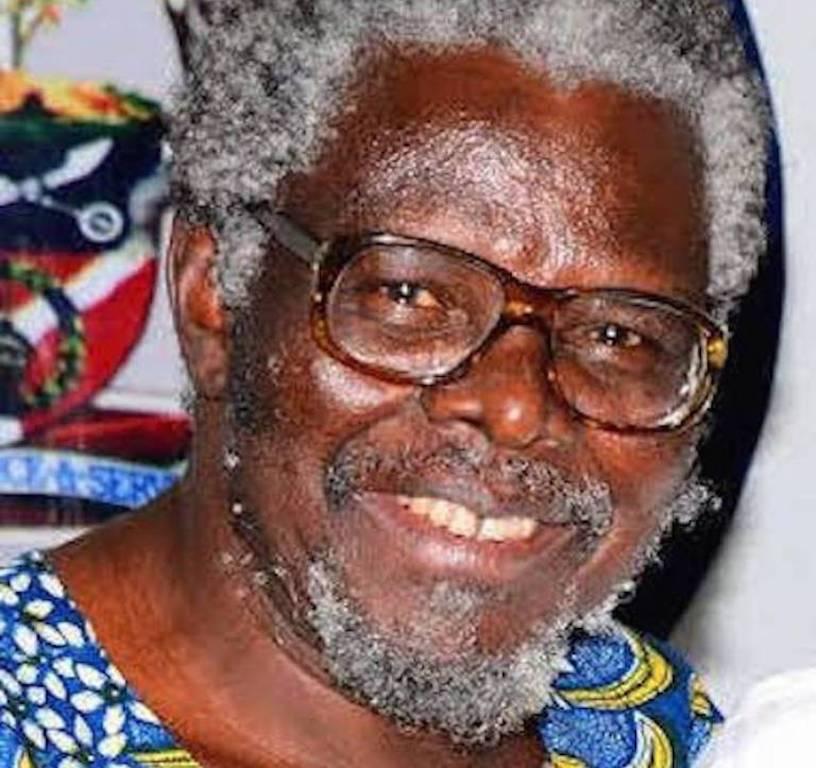
15 May marks the 80th birthday of one of Nigeria’s most enduring revolutionary intellectuals — Edwin Ikechukwu Madunagu: mathematician, journalist, Marxist theorist, archivist, teacher, agitator, and organiser.
- +Comrade Edwin Madunagu’s long march to 80, By SOLAR Collective
For more than five decades, Edwin Madunagu has stood firmly on the side of workers, students, women, peasants, and the oppressed.
For more than five decades, Edwin Madunagu has stood firmly on the side of workers, students, women, peasants, and the oppressed. While governments changed, dictators rose and fell, and many abandoned radical politics, he remained unwavering in his belief that another Nigeria, a humane and egalitarian society, is possible.
His is the story of a man who turned ideas into struggle, books into weapons, and memory into resistance.
Edwin Ikechukwu Madunagu was born on 15 May, 1946, in a Nigeria still under British colonial rule. He grew up during a period of political awakening across Africa — when anti-colonial struggles were shaking empires and new dreams of liberation were spreading across the continent.
From an early age, he showed extraordinary intellectual discipline. Mathematics fascinated him; but so did politics, history, and social justice.
He started his formal education in 1952, attending five different primary schools, including St. Bartholomew’s Primary School, Iganga, Ilesha, Osun State. His secondary education was at Okongwu Memorial Grammar School, Nnewi, Anambra State and Obokun High School, Ilesa, Osun State, which he completed in 1964. He served as a junior teacher in mathematics until his admission to the university of Ibadan in September 1966 to study Mathematics.
Edwin Madunagu belongs to a generation that believed education was not just for personal advancement. It was a tool for transforming society. As a university student and later an academic, Madunagu encountered Marxist thought — the writings of Karl Marx, Friedrich Engels, Lenin, Leon Trotsky and revolutionary thinkers from Africa, Asia, and Latin America. Those ideas would shape the rest of his life.
He did not see poverty as accidental. He saw inequality as political. He saw exploitation as systemic. And he believed ordinary people could organize to change society and make history. Through essays, political analyses, lectures, pamphlets, and newspaper columns, he challenged military rule, corruption, imperialism, ethnic chauvinism, and capitalist exploitation. He wrote not for comfort, but for conscientization. His language was sharp, ideological, fearless. He would become one of Nigeria’s most influential radical writers and public intellectuals.
You didn’t read Edwin casually. His writings forced you to think. To question power. To question yourself. For decades, Madunagu was a major voice within the Nigerian Left, helping shape revolutionary debates across campuses, unions, civil society organisations, and socialist movements. To supporters, he was a principled Marxist. To governments, he was a dangerous enemy of the state.
In the course of his revolutionary journey, Comrade Edwin Madunagu found not only a partner, but a comrade. Benedicta — known universally as “Bene” — became one of Nigeria’s most respected feminist activists, scholars, and revolutionary organisers. Together, Comrade Edwin and late Comrade Bene Madunagu built a political partnership rooted in shared ideals, sacrifice, and collective struggle. Their home in Calabar became more than a residence. It was a meeting ground for activists, students, intellectuals, and organizers from across Nigeria and beyond. They lived socialism. Their lives reflected their politics — simplicity, solidarity, commitment.
For decades, they fought side by side for women’s rights, democratic freedoms, and social justice. Their union became one of the most respected revolutionary partnerships in Nigeria’s progressive history. Throughout the country’s Nigeria’s turbulent political history, Edwin Madunagu remained uncompromising in his criticism of authoritarianism and anti-people policies.
During the administration of Olusegun Obasanjo, Madunagu emerged as one of the persistent voices challenging state repressions, neoliberal economic policies, and attacks on democratic struggles. His activism came at a price. He faced harassment, intimidation, and detention. The state thought detention would silence him. Instead, it amplified his voice. His experience reinforced his lifelong conviction that the struggle for justice demands courage and sacrifice. Revolutions are not sustained by slogans alone. They survive through memory. That belief gave birth to the Socialist Library and Archives, widely known as SOLAR.
The project emerged from the combined archives and libraries built through decades of revolutionary work by Edwin and Bene Madunagu, donations from Comrade Curtis Joseph and recoveries from Comrade Eskor Toyo’s family. The SOLAR project was hugely supported by his other comrades, including Comrade Kayode Komolafe, Comrade Chido Onumah, Comrade Kole Shettima, Comrade Sola Olorunyomi, Comrade Femi Falana, SAN, Comrade Eno Edet-Traore and late Comrade Biodun Jeyifo who served as the Chair of both the Board of Advisers and Board of Trustees.
In 2021, the collection was formally handed over to the Nigerian Left as a permanent intellectual resource. SOLAR is not just a library. It is an archive of struggle. A memory bank of radical political struggle in Nigeria. From Marxist literature to feminist writings, labour history to anti-colonial struggles, SOLAR preserves intellectual traditions often erased from mainstream history.
Even in his later years, Comrade Edwin Madunagu continued organising, mentoring, documenting, and educating new generations. Another major pillar of his work has been the programme known as Conscientising Nigerian Male Adolescents or CMA.
The initiative seeks to challenge toxic masculinity, gender-based violence, sexism, and social irresponsibility among young men. For Madunagu and his comrades, revolutionary politics is not only about state power; it is also about transforming human relationships and social consciousness; teaching responsibility, equality, critical thinking, and respect for others. It changed how many of us saw the world. Then came the painful years.
On 26 November, 2024, Benedicta Madunagu passed away peacefully at the Madunagu residence in Calabar at the age of 77. For Edwin Madunagu, it was not only the loss of a wife. It was the loss of a lifelong comrade in struggle. A partner in thought.
A companion in sacrifice. A fellow revolutionary. Bene and Edwin were inseparable in their radical activism and the struggles of the Nigerian Left. They built an extraordinary political and intellectual partnership together. But another devastating blow would soon follow.